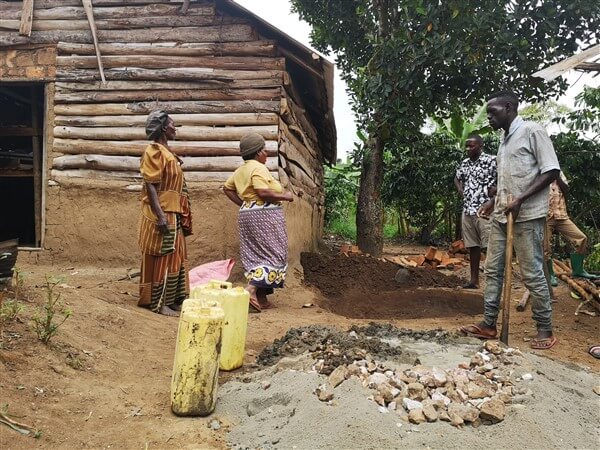
We’re proud to have launched impactful, sustainable projects that continue to thrive and make a real difference, thanks to the dedication of our team and partners!
Would you like to get involved? We offer a non-profit volunteering opportunity, meaning we only aim to cover basic costs. As a result, you contribute very little — in most cases just $20 per night, which includes project placement, accommodation and meals. We’re able to keep the cost so low because volunteers stay with carefully selected host families, chosen in collaboration with our trusted partners at the Catholic Diocese.
We offer sustainable safaris through our partnership with a safari company. They dedicate 33% of their profits to our projects and offer you the possibility to visit one of them. At the projects you will get a feel for the real Uganda and if you are into it, you can help out with activities like the picking/roasting of coffee, helping with dinner preparation or singing and dancing with the project members/children.
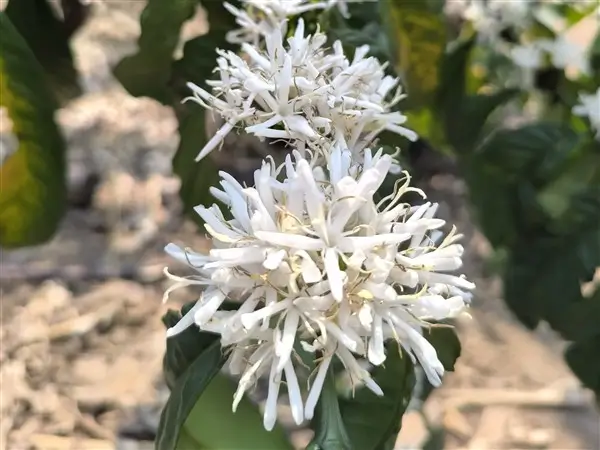
Our newest project is really down-to-earth. We got a piece of land and built a simple local house on it, plus a chicken coop and a small pig shelter. We’ve hired a local worker and make sure he earns more than the average salary in the area. Together we look after the animals and farm the land. We already have around 30 big coffee plants growing there, and honestly, the coffee they produce is some of the best you’ll ever taste.
The farm now has 4 pigs, 20 chicken and 15 tiny chicks. We aim to have around 40 chicken around so we can sell the eggs to the local stores.
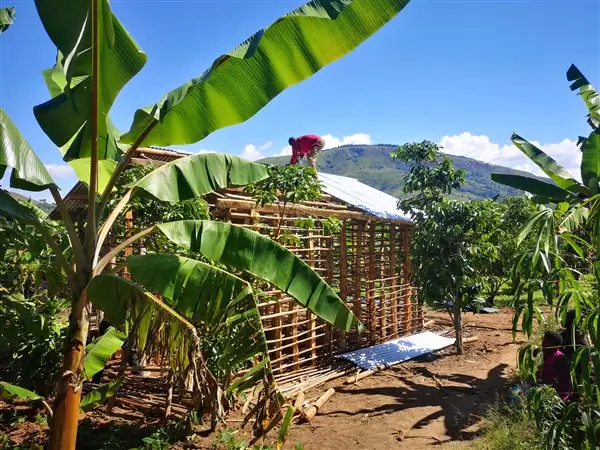
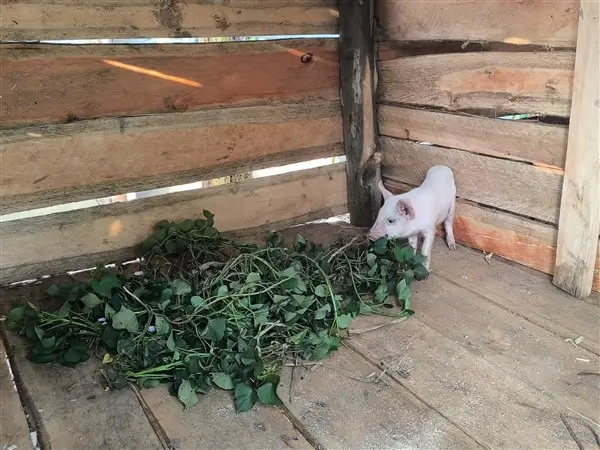
In this photo, you can see one of the piglets we recently bought, happily munching on sweet potato leaves grown right here on the farm. In the background, that’s our employee Kenneth together with his wife, Barbrah, carrying bundles of sweet potato suckers to the field for planting.
We started with four piglets — three females and one male — each costing about $15. Once they’re fully grown, we expect to sell them for roughly $50 to $75 each, depending on their size and weight. It’s a simple, practical setup, but it has the potential to make a big difference over time.
At the end of every year, we sit down and calculate the profit the farm has made. That includes everything — the money from our coffee, onions and tomatoes, the eggs and chickens we sell, and of course the piglets. After we subtract all the expenses, whatever is left goes straight to a nearby school that has many children from low-income families.
The kids’ daily lunch is just posho (maize flour) and beans — filling, but missing the healthy fats and animal protein that are so important for growing brains and strong bodies. With the profit from the farm, we buy fatty beef or goat meat and prepare nutritious lunches for the students. Depending on how well the farm did that year, we’re able to provide these special meals once a week or sometimes even multiple times a week.
In 2016, our founder was living in Masaka and noticed massive piles of plastic waste everywhere—mainly soda bottles and plastic bags. After many meetings with a major recycling company in Kampala, we were given the opportunity to start a recycling program in Masaka. This marked the beginning of the Masaka Recycling Initiative, a project that not only helped clean up the environment but also created economic opportunities by promoting recycling efforts.
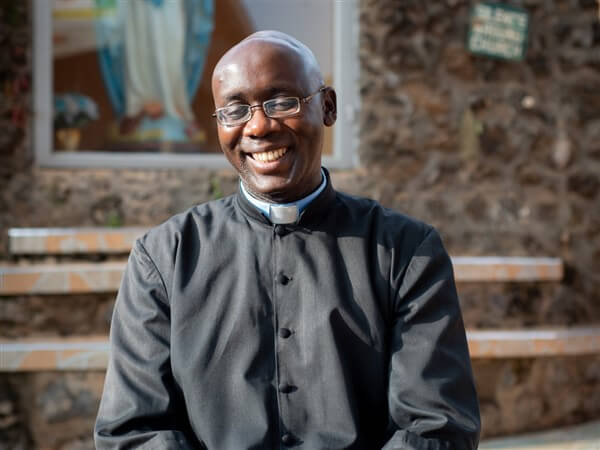
In the photo, you see Father James Ssendege, whose support was vital to the project’s success. The Catholic Church generously provided the land that made it all possible.
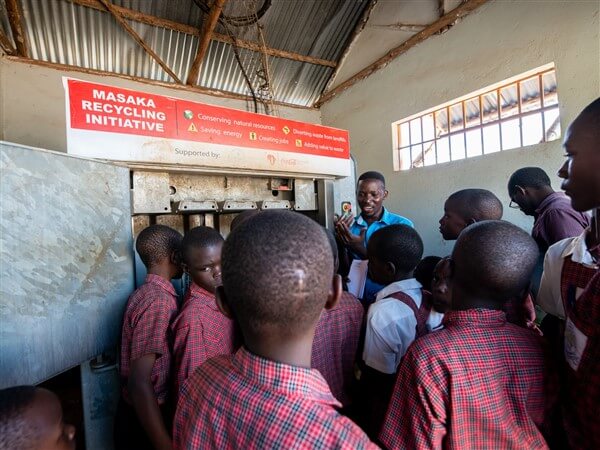
We began by constructing a building to house the baler and installing high-voltage power to operate the machine. The baler is a press that compresses plastic bottles into tightly packed bales using high pressure. These bales of plastic waste are then collected weekly by a large truck and transported to the capital.
Education is a key focus of the project, alongside job creation. We provide recycling education at several primary and secondary schools, and together with the students, we build waste bins to encourage them to recycle as well.
Our journey started small but has grown into a true success. At the time of writing, more than 20 people are employed full-time, over 3,000 individuals earn an income by collecting plastic, and we’ve removed more than one million kilos of plastic waste from the environment!
Every year, hundreds of children receive education on upcycling and recycling the plastic waste around their homes, helping to shape a new generation of environmentally conscious Ugandans.
In mid-2020, once the project became profitable, we stepped back, as our goal is to launch self-sustaining initiatives. On to the next challenge!
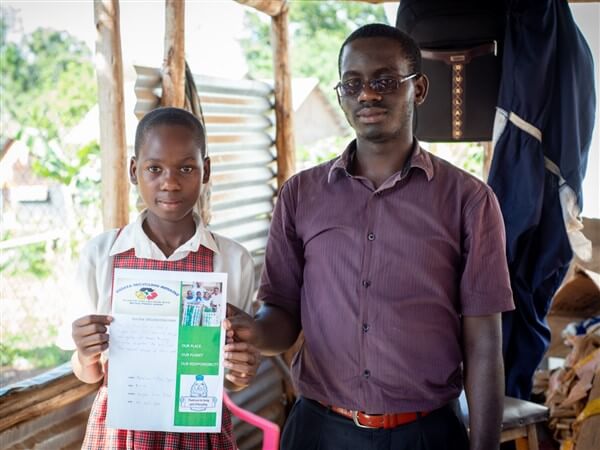
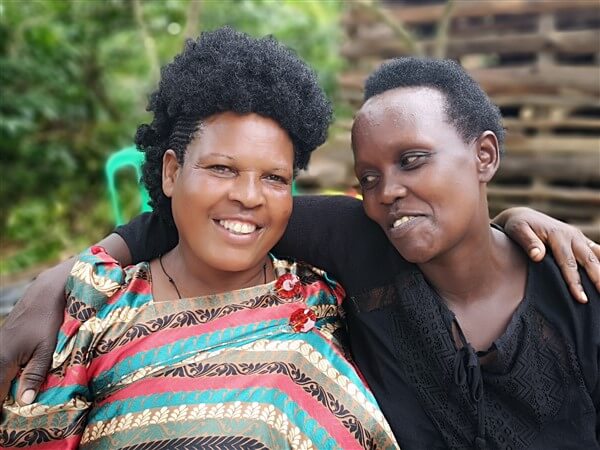
Since 2014, we have been working with a women’s group of around 25 women in Rakai. Initially, we simply supported them with the creation and maintenance of a shared vegetable garden, but over the years (and thanks in part to support from the Municipality of Deventer) we’ve been able to do much more.
The main challenge often lies in the initial investment, which is also the case for this women’s group. People simply don’t earn enough to launch larger projects. With an average income of around $25 per month it’s easy to understand why they can often only invest about $1 per month.
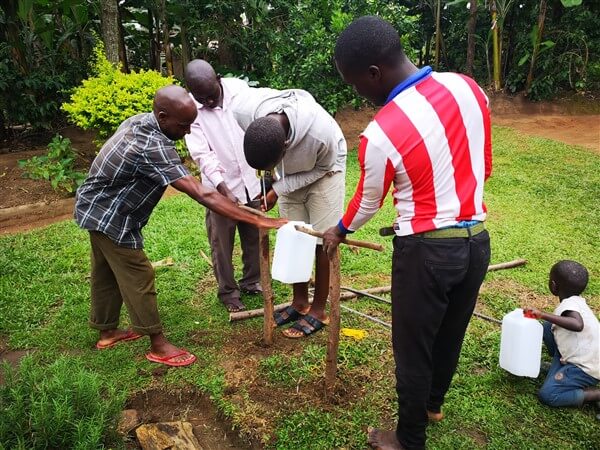
In the photo, you can see a low-tech handwashing station that allows people to wash their hands without touching anything with dirty hands. We installed this in 2020 as part of COVID-19 prevention efforts in the village of the women’s group.
In addition to the installations, we focused heavily on the importance of good nutrition and physical activity to stay healthy.
The population is very young, and especially in rural areas, you rarely see the lifestyle diseases that have caused so many problems in Western countries.
A second project involved building a water tank, which allowed the women to start a mushroom farming project. Once again, thanks to the Municipality of Deventer, we were able to carry out this project, and it has been a great success! The women dry the mushrooms and sell them in the village, and every month, a shipment is sent to Masaka, where the dried mushrooms are sold in several shops.
The great advantage of how we run our projects is that we don’t necessarily have to remain involved. Our focus is on starting self-sustaining projects. This fosters ownership and pride among the people; no one wants to depend on others.