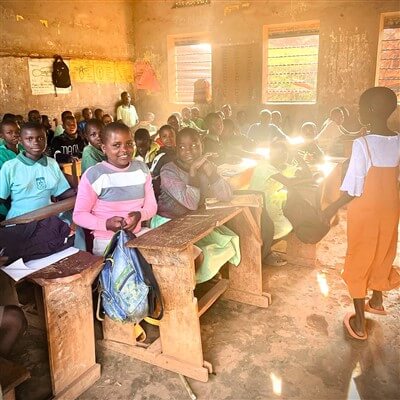
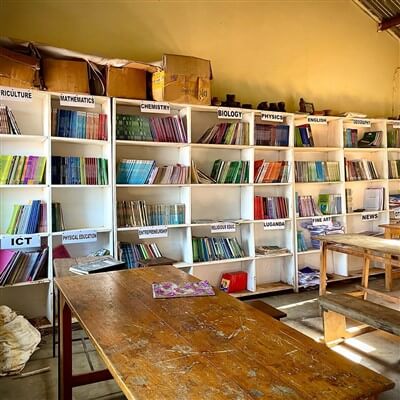
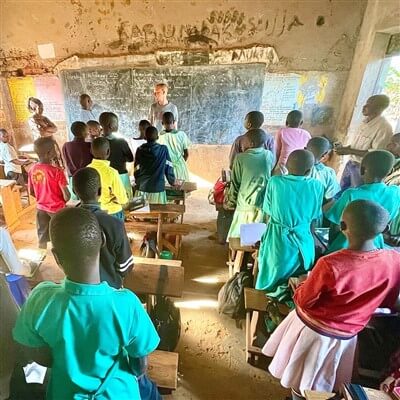
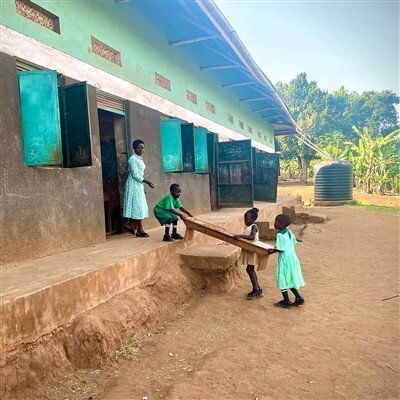
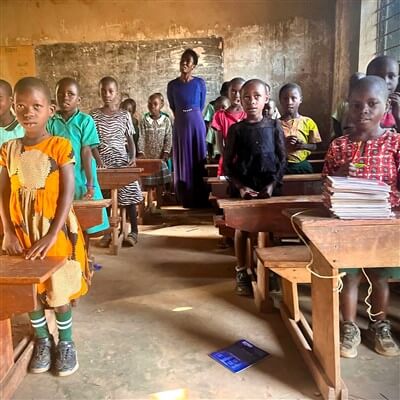
As a volunteer teacher assistant at the primary and secondary schools in Kyansi, you’ll have the chance to make a meaningful difference in the daily lives of local students. Whether you’re helping with English, math, or creative subjects, your presence in the classroom brings extra support to both teachers and students. You don’t need to be a professional teacher—just a willingness to share your time, patience, and enthusiasm is enough. Working alongside local staff, you’ll help with lessons, answer questions, and give children the encouragement they need to stay motivated and engaged in their learning.
Outside the classroom, you’ll also get to lead or assist with fun and enriching activities like sports and drama. These moments are often the highlight of the day for many kids, giving them a chance to express themselves, build confidence, and develop teamwork and communication skills. Whether it’s organizing a football match or guiding a short play, your involvement helps create a more dynamic and supportive school environment. For the children, these activities are not just play—they’re powerful tools for personal growth, self-expression, and joy.
There’s plenty to get involved in at this project, but no pressure, you’re free to choose the activities you feel most comfortable with.
Teaching & Mentorship
Get involved at Kyansi Primary and Secondary School, where your support in subjects like English, science, and life skills can make a real difference. Whether you’re assisting in the classroom or offering one-on-one help, your presence brings extra encouragement and energy to the students. Beyond academics, you’ll also have the chance to mentor and connect with learners in meaningful ways—boosting their confidence and helping them see what’s possible for their future.
Agriculture plays a vital role at the school, helping to provide daily meals for both the children and staff. Since many families can’t afford to pay full school fees, growing our own food keeps costs low while ensuring everyone is well-nourished. Volunteers can make a big difference by helping in the gardens—planting, watering, harvesting, and learning about local farming methods. Your hands-on support not only contributes to food security but also helps build a more self-sustaining and healthy school environment.
Helping in the gardens can of course be combined with helping at other activities.
At the heart of the school’s sustainability efforts is animal husbandry—a hands-on way to provide fresh milk, eggs, and other essentials that help feed both students and staff each day. As a volunteer, you’ll have the chance to jump into the daily rhythm of caring for goats, chickens, or other livestock—feeding them, maintaining clean shelters, and learning how the community works with animals to support education. It’s a unique opportunity to make a real impact, one early morning feeding or freshly collected egg at a time.
Sports, drama, singing, and dancing all play a powerful role in the daily life of the children, offering far more than just fun—they’re vital tools for personal growth, confidence, and joy. Through sports, kids develop teamwork, discipline, and resilience, while staying active and healthy. Drama gives them a space to express themselves, build self-esteem, and explore their creativity. Singing and dancing, which are deeply loved and naturally woven into the culture at these schools, bring energy, connection, and pure happiness to the children’s days. Whether it’s on the football field, in a play, or during a joyful dance session, these activities help children discover their strengths, connect with others, and truly shine.
For just $250 a week, you’ll enjoy a cozy room and three delicious home-cooked meals each day! Everything you need to feel comfortable and well-fed while you volunteer and soak in the beauty of your surroundings.
The Kyansi Project can host up to 4 volunteers at a time, giving you the chance to connect with fellow volunteers from around the world while immersing yourself in the vibrant Ugandan culture. Bringing a friend along can make the experience even more rewarding, as you’ll have someone to share the adventure with, learn together, and support each other throughout your time at the project!
We do things differently from most volunteer organisations. We are not in Uganda to make money — our mission is to help people. That’s why the cost to volunteer with us is very low.
In return, we ask you to show us why you would be a valuable addition to our projects. If we feel you can bring something meaningful, we will be delighted to host you!
Here are some of the most frequently asked questions. If you don’t find what you’re looking for, feel free to get in touch with us anytime via WhatsApp or email — we’re happy to help!
Upon arrival in Entebbe or Kigali, a representative of Joeboentoe will be waiting for you to take you to your lodge (if you arrive late) or to take you to your project (if you arrive early in the morning). The same applies to the return flight; we can only rest easy knowing that you are safe and sound on the plane on your way home. Therefore, our representative will drop you off at the entrance of the departure hall of Entebbe or Kigali Airport (as far as we are allowed to go) so we know that you are well and truly on your way home.
We are frequently asked if it is possible to stay one or two nights in Entebbe after arrival to acclimatize. This is of course not a problem; just let us know when you register, and we will arrange a stay in a nice lodge. The cost will be about $25 a night.
We have multiple local project coordinators who are available 24/7 to provide assistance during your stay. We also have a Dutch representative of Joeboentoe who lives alternately at Lake Bunyonyi, Masaka and Entebbe and he will be available for questions that the local project coordinators cannot answer. He will regularly visits you to see if everything is going according to plan.
Upon arrival at Entebbe or Kigali Airport, a Joeboentoe representative will be waiting to welcome you and take you to your project or to a lodge in Entebbe to recover from the journey.
At most projects, there are two accommodation options available: either on-site at the project itself or with a host family in the surrounding area. In both cases, you’ll have a clean room equipped with all the essentials—most importantly, a bed with a mosquito net. Simple breakfast, lunch and dinner are ALWAYS included.
If you choose to stay with a host family, they will warmly welcome you into their home, eager to share their traditions and learn about your culture and customs. You’ll share a (Ugandan) breakfast and dinner with the family, making it the perfect way to fully immerse yourself in Ugandan culture and enjoy a truly unique experience.
We carefully select host families near the project or school. The family receives a good contribution for hosting you, so they’ll do everything they can to make your stay comfortable and memorable.
The minimum age for volunteering is 16, there is no maximum age.
If you want to come with a group of people (two or more participants) and stay together in a volunteer house or with a host family, we will have to make special arrangements regarding your accommodation/project. So let us know when you register!
The most important requirement is that you are a calm and loving person, ready to help where needed. Age is not an issue here.
We emphasize that it is very important to be flexible during your stay in Uganda. An open mind and the will to help where needed are good qualities to have, this will help you get the most out of your time as a volunteer and be of the greatest value to the project.
Personal appearance is important to Ugandans, so we want you to dress appropriately. In Ugandan culture, a woman’s knee and thigh are something special, so please cover them. For men; shorts are worn by boys, so if you want to be seen as an adult, wear long trousers. To everyone; travel light! Uganda has many second-hand clothing markets, so just buy clothes when you are here and help the local economy at the same time!
Remember to be respectful and considerate to the people you interact with. The staff and community members you work with will have different cultural values than those you are used to. The ‘woke’ ideology of the West is not appreciated, so no ‘I identify as…’ or any outward display of sexual preference. It is not appropriate to kiss your partner in public, holding hands or a hug is no problem. If you are attracted to the same sex and are afraid to come to Uganda; there is no need for that. People generally do not care, as long as you keep it to yourself.
Another thing you have to learn to deal with is time. To be more precise; time is flexible, waiting is fine and ‘I am on my way’ can mean that the person will arrive sometime this week or within five minutes. This also applies to our local coordinators, even though we try very hard to make them more Western in the way they deal with time. So don’t get frustrated, but let our Dutch representative know if you are constantly having problems with your project and/or coordinator when it comes to time.

You are going to live and work in Uganda and based on the length of your stay this is either a work permit or a tourist visa. It is important to discuss with your insurer what your coverage is.
Uganda is a strange country when it comes to volunteer work. When we receive a registration from Uganda, the person assumes that there is payment for the (voluntary) work. This is also the reasoning of the government and for that reason obtaining a volunteer work permit is extremely expensive (2500 dollars per year!).
Thanks to our partnership with the Catholic Church, our volunteers fortunately do not have to pay these kinds of amounts. Depending on the duration of your stay, there are two options;
Short term; you come as a tourist and help (without receiving a salary) during your stay. This VISA costs 50 dollars per three months. This VISA can be renewed two times (a total of 270 days).
Long term; for a stay of one year or longer, we apply for a work permit for you in cooperation with the church. Via the church this costs 250 dollars per year.
In Uganda, some types of medicine are not allowed, so please be aware of this and discuss this with your embassy. Most medicines are easily and cheaply available in Uganda; in most cases, you do not need to bring them. Of course, we will advise you on these topics if anything is unclear.